
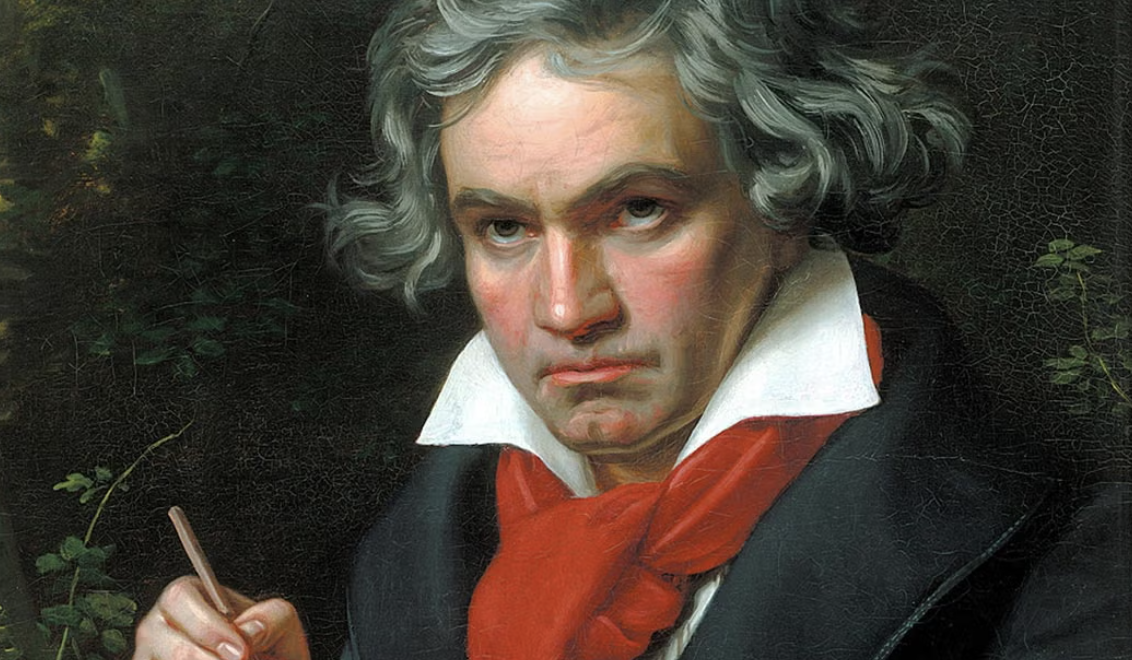
Beethoven was born in Bonn, Germany, in the year 1770. He lived most of his adult life in Vienna, Austria, and is still one of the most influential composers of all time. Beethoven helped move Western music from the classical period to the romantic period and was well known for his emotional and powerful music.
In Beethoven’s early life, he showed a strong musical talent as a child. His father, Johann van Beethoven, who was a German musician and a teacher who sang in the chapel of the archbishop of Cologne, wanted him to become famous just like Mozart. Beethoven’s childhood was strict, and he was often unhappy, possibly from his father’s abuse. Beethoven composed many sonatas for piano and violin, but he preferred the piano, as evidenced by his many more creations after studying with several teachers, including Joseph Haydn, known as the “Father of the Symphony.” He later moved to Vienna in 1792 to further his musical education, following his father’s passing.
Beethoven’s hearing problems began around 1798, which gradually worsened until he was almost completely deaf, so he decided to mainly communicate with books. Beethoven’s new situation caused him to feel frustrated and isolated for a period of time; he was simply depressed. Yet he continued composing because of his strong dedication to music and all the effort he had put into it. His major works during this period include pieces such as Symphony No. 9, which was a testament to his emotions.
Beethoven passed away in 1827 in Vienna, and his funeral was attended by thousands of people. He was so popular that even now, his music is still performed and studied worldwide, which later influenced composers such as Brahms and Wagner, and he was remembered for his perseverance, creativity, and impact on emotion-filled music. My personal favorite piece from Beethoven is his Moonlight Sonata, 3rd movement.