
Every organism, whether flora or fauna, must make a living by searching for food. Plants create nutrients through photosynthesis, and animals hunt for food in other living organisms – that is, unless one takes a shortcut. Organisms have learned to cooperate about a billion years ago, but some take advantage of this trade. Let’s look at some examples of parasites that manipulate animals to reproduce.

Parasite: Ophiocordyceps unilateralis
Host: Carpenter Ants
Ophiocordyceps unilateralis, or better known as zombie-ant-fungus (the picture in this article), targets ants just as the name implies. The fungus begins as a sticky spore on the forest floor. Imagine that a carpenter ant is unfortunate enough to walk over it, and the fungus attaches itself to the ant. Once it enters the ant’s body, it reproduces and replicates itself until it manipulates the ant’s behaviour, positioning it at a warm and humid place that is perfect for the spore to reproduce. When the ant finally dies, the spore digests the ant and erects a triumphant stalk from the poor victim’s head, and searches for another ant to manipulate… and the cycle continues.
Parasite: Nematomorpha
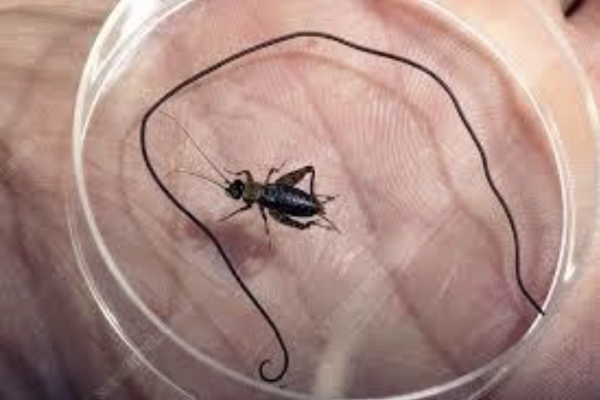
Host: Crickets and grasshoppers
It is not just plants that can manipulate animals’ bodies; other organisms can too. The Nematomorpha, also known as the hairworm, is manipulating its brain. Let us break down its life cycle: The worm starts in a river or a stream as an egg, and it develops into a larva. A mayfly larva discovers the worm larva and consumes it, but that actually helps the worm to complete its life-cycle. The mayfly flies out of its water, where it gets eaten by what the worm is really after, a cricket. The cricket eats the worm, unfortunately, but does not notice anything at first. The worm eats the cricket’s stored-up fat, but it still needs a lift to get it into the water. So, it releases some hormones in the cricket’s brain to set them wandering before setting them plugging into a lake, where the poor cricket drowns, and the worm climbs out of its body and completes its life cycle.
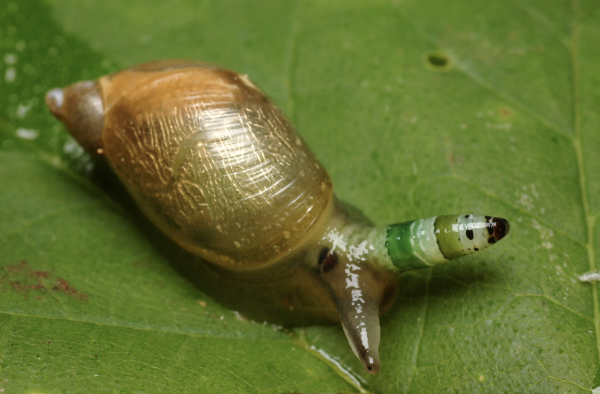
Parasite: Leucochloridium paradoxum
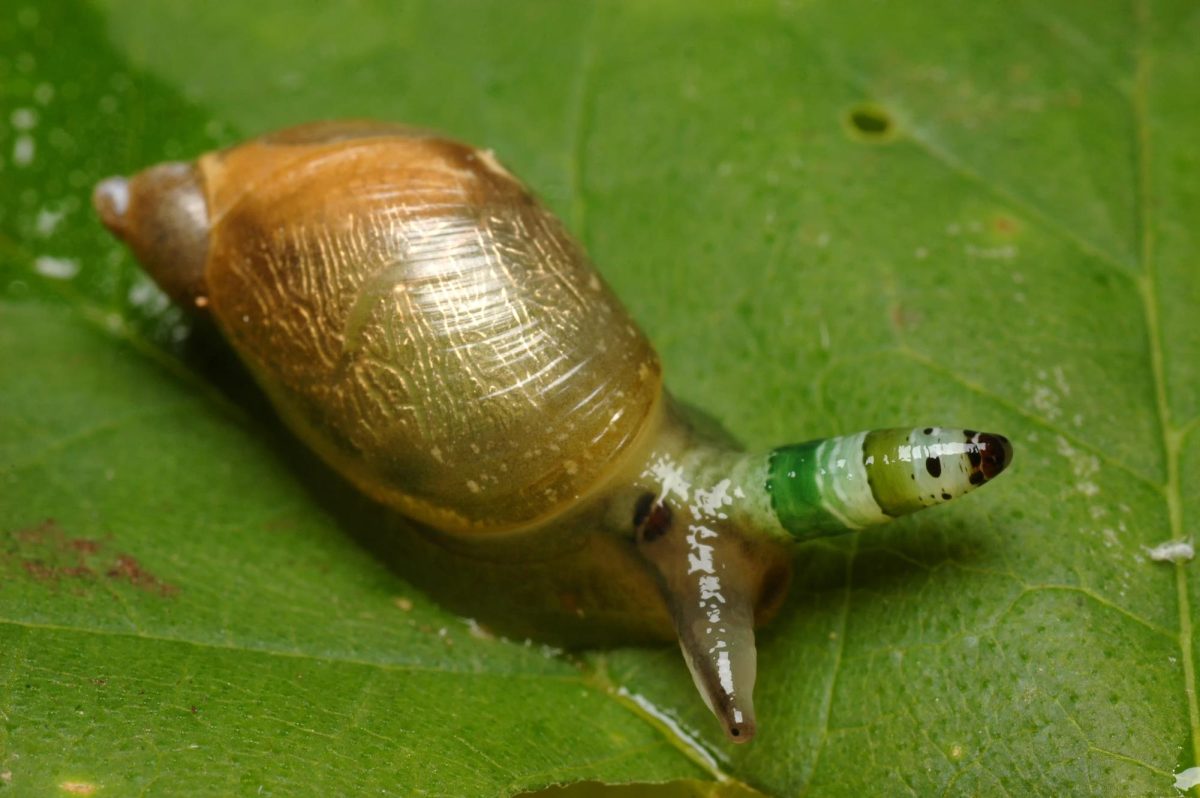
Host: Snails
The parasite is Leucochloridium paradoxum, a kind of parasite worm, which makes snails into billboard zombies. Its life begins when it is eaten by a snail, and grows up in the snail. They invade the snail’s eyes, making them swell and pulsate in a strange manner. And they hijack the snail’s brain to make them go into a sunny and warm area. Birds see the snails vividly and have a free lunch, and the worm reproduces before laying eggs and landing in bird poop (yeah, literally).
As you can see, the animal world is diverse; there are a lot of examples I have not mentioned, such as the tongue-eating louse, which eats fish’s tongue, and parasitic wasps that lay their eggs in their hosts. Some parasitic wasps lay their eggs in other parasitic animals. In the end, it is just a matter of survival.
Sources:
https://www.britannica.com/science/zombie-ant-fungus – Zombie Ant fungus
https://www.youtube.com/watch?v=YB6O7jS_VBM – hairworms
https://www.gideononline.com/blogs/zombie-snails-brain-hijacking-parasites-and-mind-control-in-nature/ – Zombie snail parasite